IBC Totes
Intermediate Bulk Containers for liquid and granular materials. Request quotes on new and reconditioned totes from partner suppliers across Ohio.
Request a Quote
What Are IBC Totes?
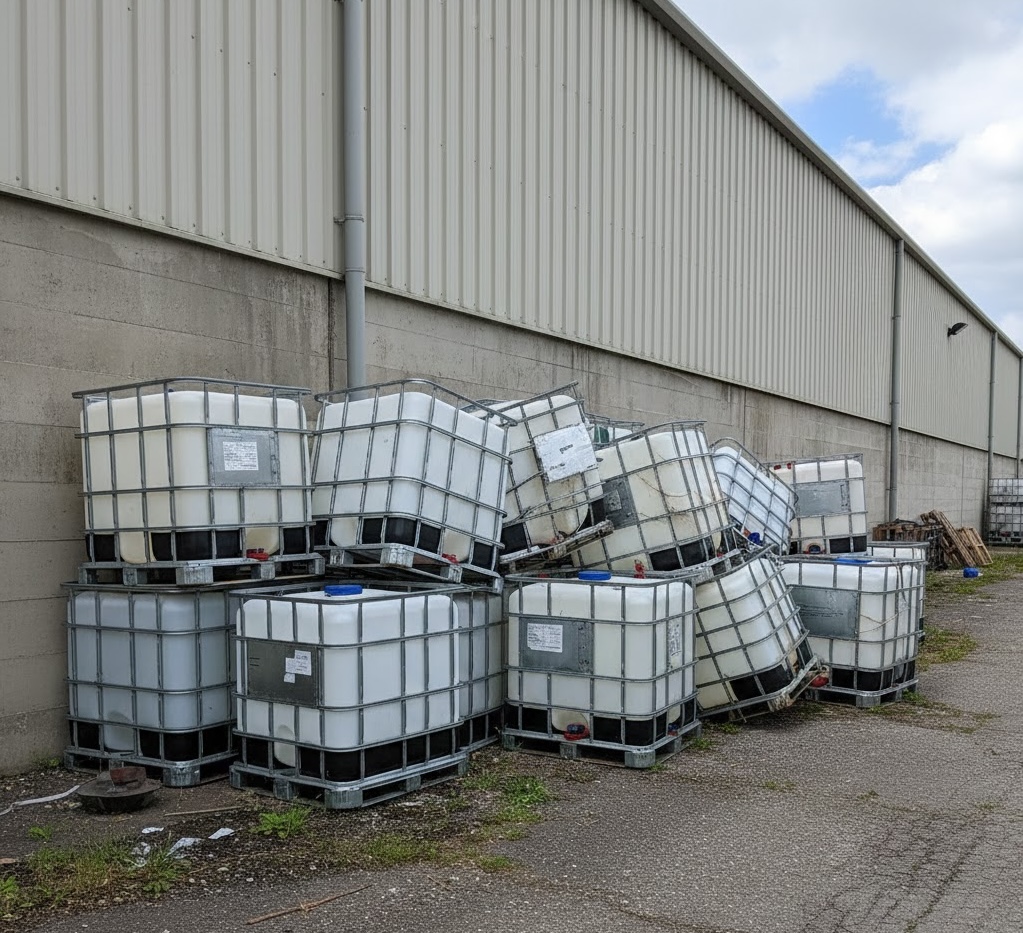
Intermediate Bulk Containers (IBCs), commonly called totes, tanks, or IBC tanks, are industrial containers designed for storing and transporting bulk liquids and granular materials. They typically hold 275-330 gallons and are built on integrated pallets for easy handling.
IBC totes feature a durable HDPE (high-density polyethylene) bottle surrounded by a galvanized steel cage for protection. This design supports forklift handling and storage, which makes them common in manufacturing, distribution, and processing operations.
Ohio Packaging takes quote requests for new and reconditioned IBC totes and passes them to partner suppliers in its network. Partner suppliers set prices, terms, and availability, so pricing is by quote.
Common Sizes
These are the two most common IBC tote sizes. Availability depends on partner suppliers.
The standard size for most industrial applications. Built on a 48" x 40" footprint for forklift and pallet jack handling.
Larger capacity for high-volume operations. A taller profile holds 55 more gallons than a 275 gallon unit.
What to Check on a Used Tote
Condition varies from tote to tote. These are useful things to confirm with a partner supplier before you order.
Previous Contents
Ask what the tote held before. Previous contents affect what it can safely hold next.
Ask for any records the supplier has, and check current regulations for your product.
Cleaning and Testing
Ask how a reconditioned tote was cleaned and whether the bottle was tested for leaks.
Processes vary by supplier, so confirm which steps were done on the totes being quoted.
Galvanized Steel Cage
The steel cage protects the bottle during handling and supports stacking where the design allows.
Look for rust, bent bars, and damaged welds. Ask about the stacking limit for the specific tote.
Valve and Lid Condition
Ask whether the valve, gaskets, and lid are original or were replaced.
Confirm the valve and fitting size match your equipment before you order.
IBC Tote Components
Understanding the components of an IBC tote helps you choose the right container and know what to inspect.
HDPE Bottle
High-density polyethylene inner container that holds the liquid. UV stabilized and chemical resistant.
Made from blow-molded HDPE, the bottle is lightweight, and it can be replaced if damaged.
Steel Cage
Galvanized steel frame that surrounds and protects the bottle. Allows for safe stacking and forklift handling.
The tubular steel cage is welded and galvanized for corrosion resistance. Stacking limits depend on the design, so check the specific tote.
Pallet Base
Integrated pallet (steel, plastic, or wood composite) allows handling by forklift or pallet jack.
The base is attached to the cage and may be steel, plastic, or wood composite. Ask which base the tote has.
Discharge Valve
Bottom outlet for dispensing contents. Available in butterfly or ball valve configurations.
Outlets are commonly 2" or 3", with various valve types and fittings. Confirm size and thread against your equipment.
Top Fill Opening
6" or 8" lid with gasket seal for filling and venting. Screw-on cap provides secure closure.
The fill opening includes a gasket for the seal. Some models include vents or dust caps.
ID Plate
Plate showing details such as manufacturer, manufacturing date, capacity, and tare weight.
Ask to see it when buying a used tote, and check current regulations for your use.
IBC Tote Grading System
Used IBC totes are commonly graded on bottle and cage condition. Definitions can vary by supplier, so confirm what a grade means before you order.
Grade A - Like New
Bottles with minimal use, clean inside and out. Cage in good condition with no rust or damage.
Applications where cleanliness and appearance matter
Grade B - Good Condition
Bottles with normal wear, cleaned. Cage may have minor surface rust but is structurally sound.
General manufacturing, cleaning products
Grade C - Economy
Bottles showing wear, may have staining. Functional for non-critical uses. Cages may need minor repairs.
Non-critical applications, waste collection, one-time use
How Totes Are Typically Reconditioned
Steps vary by supplier. Use this as a checklist, and ask which steps were done on the totes being quoted.
Receiving
Used totes collected and logged
Pre-Inspection
Initial assessment of bottle and cage condition
Draining
Remaining contents removed and disposed of
Hot Wash
Interior cleaned with hot water and detergent
Rinse
Rinse cycles to remove residue
Pressure Test
Bottle tested for leaks
Final Inspection
Visual inspection and grading assignment
Valve Replacement
New valves and gaskets installed as needed
Where IBC Totes Get Used
IBC totes are used across many industries. Whatever the use, confirm the tote suits your product.
Chemical Manufacturing
Confirm material compatibility
- Cleaning products
- Lubricants
- Process liquids
Cosmetics & Personal Care
Ask about previous contents
- Lotions & creams base
- Surfactants
- Glycerin
Water Treatment
Confirm material compatibility
- Treatment chemicals
- pH adjusters
- Coagulants
Paints & Coatings
Confirm valve and gasket compatibility
- Base materials
- Resins
- Additives
New vs. Reconditioned IBC Totes
Compare new and reconditioned totes to decide which fits your application.
| Feature | New IBC Totes | Reconditioned |
|---|---|---|
| Initial Cost | Usually higher | Usually lower |
| Availability | Depends on partner suppliers | Depends on partner suppliers |
| Environmental Impact | New plastics & steel | Extends the life of an existing tote |
| Condition | Unused | Varies by grade and previous contents |
| Best For | Uses that call for an unused bottle | General use where a used tote is acceptable |
Not sure which option fits? Describe your application in a quote request and a partner supplier follows up.
Request a QuoteFrequently Asked Questions
Have questions about IBC totes? Find answers to common questions below.
What does IBC stand for?
IBC stands for Intermediate Bulk Container. These are industrial-grade containers designed for storing and transporting bulk liquids and granular materials. They sit between 55 gallon drums and tank trucks.
What should I ask about a tote's previous contents?
Ask what the tote held, how it was cleaned, and whether the supplier has records. If you are not sure a used tote suits your product, check current regulations before you buy.
What affects how long an IBC tote lasts?
Sun exposure, chemical contact, and handling all matter. The HDPE bottle may need replacing before the steel cage and pallet do.
What is the difference between 275 and 330 gallon totes?
The 275-gallon tote is the standard size (48x40x46"), while the 330-gallon is a taller version (48x40x53") that holds 55 more gallons. Both have the same footprint.
Can IBC totes be stacked?
Many IBC totes are designed to be stacked, with the steel cage providing structural support. Limits depend on design, condition, and load, so ask the partner supplier about the specific tote.
What should I include in a quote request?
List the size, new or reconditioned, grade, quantity, what you plan to store, any valve or fitting needs, and your Ohio location. Pricing is by quote from partner suppliers.
Can I sell used IBC totes?
You can request an offer through Ohio Packaging. Tell us how many totes you have, their condition, and what they held, and we pass the request to partner suppliers. Availability depends on partner suppliers.
Can the bottle be replaced if damaged?
Yes, the HDPE bottle inside an IBC tote can be replaced. This is called "rebottling" and extends the life of the cage and pallet. Repair is available through partner suppliers, and availability depends on partner suppliers.
IBC Tote Services
Request any of these through Ohio Packaging. Availability depends on partner suppliers.
Ready to Request IBC Totes?
Send one request and we pass it to partner suppliers in our network. A partner supplier follows up with pricing and availability on new or reconditioned IBC totes. We take requests from across Ohio; availability depends on partner suppliers.
Have Used Totes to Sell?
Tell us how many you have, their condition, and what they held. We pass your request to partner suppliers, and availability depends on partner suppliers.
Request an Offer for Your Totes →Request a Free Quote
Need a Larger Quantity?
Put the quantity in your request. Pricing on any quantity is by quote from partner suppliers.