Pallets
Wood and plastic pallets in Grade A, B, and C conditions. Request quotes from partner suppliers for warehousing, shipping, and storage.
Request a Quote
Pallets for Common Uses
Pallets are a basic part of logistics, warehousing, and material handling. They move almost everything that travels by forklift, from retail goods to machinery.
Ohio Packaging takes quote requests for new and used wood, plastic, and presswood pallets and passes them to partner suppliers in its network. You might want Grade A pallets for customer shipments or Grade C pallets for one-way use; say which in your request.
Partner suppliers set prices, terms, and availability, so pricing is by quote. Repair, recycling, and pickup of surplus pallets are available through partner suppliers.
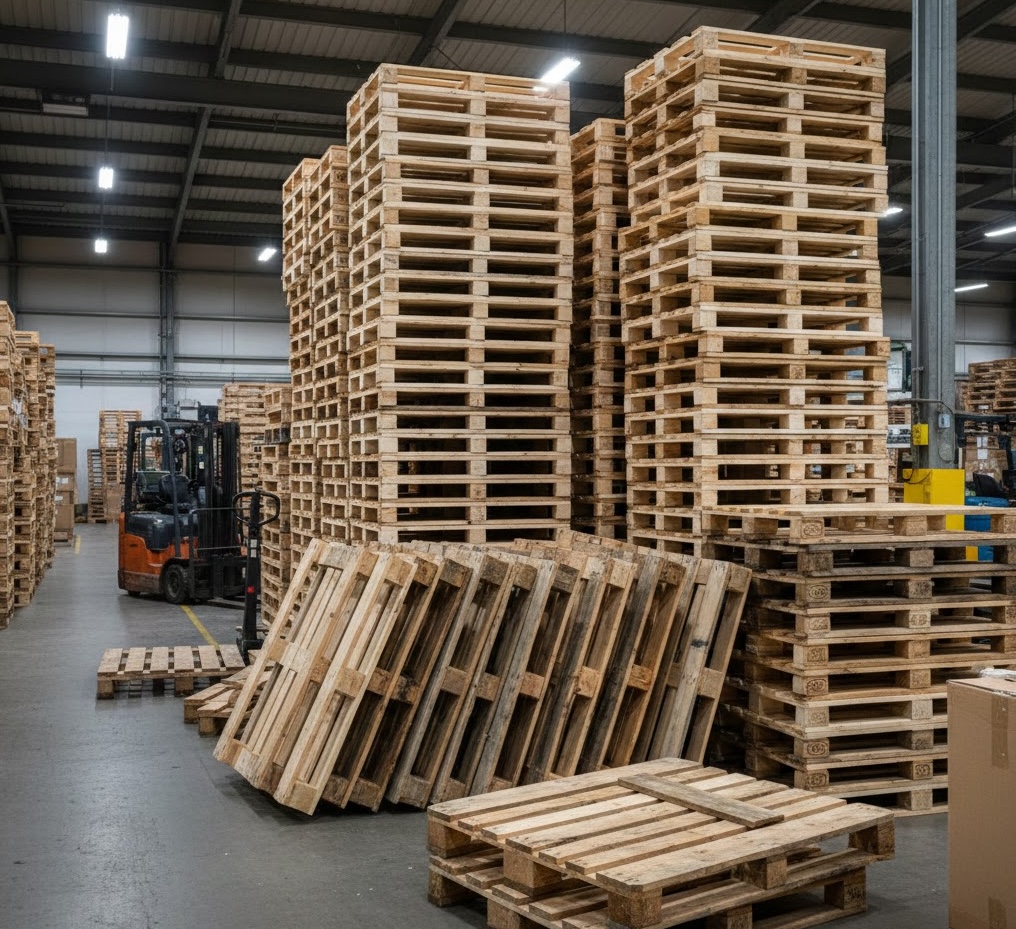
Types of Pallets
Wood, plastic, and presswood pallets each suit different applications. Tell partner suppliers which type you need, or describe the load and ask.
Wood Pallets
Traditional wooden pallets manufactured from hardwood or softwood lumber. The most widely used pallet type across all industries.
FEATURES:
- Common for one-way use
- Easily repaired
- Recyclable
- Widely used
- Made in various sizes
BEST FOR:
Plastic Pallets
Durable molded plastic pallets built for repeated use. Often chosen for closed-loop supply chains.
FEATURES:
- Built for repeated use
- Easy to wash
- Moisture resistant
- Consistent weight
- No splinters or nails
BEST FOR:
Presswood Pallets
Engineered pallets made from compressed wood chips and resin. Lightweight and molded in one piece.
FEATURES:
- Molded one-piece build
- Lightweight
- Nestable design
- Splinter-free
BEST FOR:
Pallet Grading System
Grades describe the condition of a used pallet. Definitions can vary by supplier, so confirm what a grade means before you order.
Premium / Like New
Pallets in good condition with minimal wear. No broken boards, no repairs, clean appearance. May have been used once or twice.
- No broken boards
- No repairs visible
- Minimal staining
- Structurally sound
- Clean appearance
Pricing: By quote from partner suppliers
Ideal for: Customer-facing shipments and other loads where appearance matters
Standard / Good Condition
Pallets showing light wear with minor cosmetic issues. May have a repaired board or two. Functional and structurally sound.
- A repaired board or two
- Light staining acceptable
- Functional
- Structurally sound
- Minor cosmetic wear
Pricing: By quote from partner suppliers
Ideal for: Warehousing, internal transfers, manufacturing operations, general distribution
Economy / Usable
Pallets with visible wear and multiple repairs. Still functional for many applications, and often chosen where appearance matters less.
- Multiple repairs acceptable
- Visible wear
- Functional condition
- May have staining
Pricing: By quote from partner suppliers
Ideal for: One-way shipping, scrap collection, internal use
Common Sizes
Different industries use different pallet sizes. The 48x40 GMA pallet is the most common, and availability of other sizes depends on partner suppliers.
The most common pallet size in North America, used in grocery, retail, and general warehousing.
Common in telecommunications and paint. Also used in chemical and beverage sectors.
Used for drum and barrel storage in chemical, petroleum, and manufacturing work.
Used in the beverage industry and for smaller unit loads and retail distribution.
Used for auto parts packaging and shipping.
Used in the chemical industry for 55-gallon drums.
Used in the chemical sector, including drum storage.
Used in the dairy industry for crates and dairy product containers.
Pallet Construction Types
Understanding pallet construction helps you choose the right pallet for your material handling equipment and operations.
Stringer Pallets
The most common pallet design using 2x4 or 3x4 lumber stringers running the length of the pallet. Typically 2-way entry but can be notched for 4-way entry.
Advantages:
- Usually lower cost
- Easy to repair
- Widely used
Considerations:
- •2-way entry (unless notched)
- •Less forklift flexibility
Block Pallets
Built with blocks of solid wood, plywood, or plastic at all four corners and center. Allows true 4-way forklift entry.
Advantages:
- True 4-way entry
- Sturdy construction
- Common in automation
Considerations:
- •Usually higher cost
- •More complex to repair
ISPM 15 Heat Treated Pallets
International Standards for Phytosanitary Measures No. 15 (ISPM 15) covers wood packaging material used in international trade, to help prevent the spread of pests. Heat treatment is a common method.
Requirements:
- Wood core temperature of 56°C for 30 minutes
- HT mark on the pallet
- Check current regulations for your destination country
Questions to Ask:
Industries That Use Pallets
Pallets are used across many industries. We take requests from across Ohio; availability depends on partner suppliers.
Manufacturing
Raw materials, WIP, finished goods
Retail & Grocery
Store distribution, backroom storage
Automotive
Parts storage and shipping
Chemical
Drum storage
Agriculture
Farm products, nursery items
E-commerce
Fulfillment, returns processing
Warehousing
Storage, internal transfers
Distribution
Outbound shipping, unit loads
The Pallet Lifecycle
Reusing a pallet avoids building a new one. Here is how a pallet typically moves from first use to recycling.
Manufacturing
New pallets produced from lumber or recycled wood
First Use
Pallets enter supply chain for product transport
Recovery
Used pallets collected from receivers
Inspection
Pallets sorted by condition and graded
Repair
Damaged pallets repaired for reuse
Resale
Reconditioned pallets sold again for reuse
Recycling
End-of-life pallets ground for mulch or fuel
Pallet Services Through Partner Suppliers
Request any of these through Ohio Packaging. Availability depends on partner suppliers.
Frequently Asked Questions
Have questions about pallets? Find answers to common questions below.
What is a GMA pallet?
GMA stands for Grocery Manufacturers Association. A GMA pallet is the 48" x 40" standard pallet size used throughout North America, particularly in grocery, retail, and general warehousing.
What is the difference between 2-way and 4-way pallets?
2-way pallets can only be accessed by forklifts from two opposite sides. 4-way pallets (block pallets or notched stringer pallets) allow forklift entry from all four sides, offering more flexibility in handling and warehouse operations.
Do I need heat treated pallets?
Many countries require wood packaging on imported goods to meet ISPM 15, which is why exporters look for the HT mark. If you are shipping domestically, standard pallets are usually sufficient. For export, check current regulations for your destination.
What affects how long a wood pallet lasts?
Load weight, handling, storage conditions, and how many trips it makes all matter. Repair can return a damaged pallet to use.
Can damaged pallets be repaired?
Most damaged wood pallets can be repaired by replacing broken deck boards, stringers, or blocks. Repair is available through partner suppliers, and availability depends on partner suppliers.
What is the weight capacity of a standard pallet?
Capacity depends on the pallet type, condition, and whether it is on the floor, moving, or in a rack. Ask the partner supplier for ratings on the pallet being quoted. The size guide explains the three load types.
Should I choose wood or plastic pallets?
Wood pallets are common for one-way shipping and open-loop supply chains. Plastic pallets suit closed-loop systems and repeated use, and usually cost more up front.
Can I sell used pallets?
You can request an offer through Ohio Packaging. Tell us how many pallets you have, their size, and their condition, and we pass the request to partner suppliers. Pickup is available through partner suppliers, and availability depends on partner suppliers.
Ready to Request Pallets?
Send one request and we pass it to partner suppliers in our network. A partner supplier follows up with pricing and availability. We take requests from across Ohio; availability depends on partner suppliers.
Sell Your Pallets
Have surplus pallets? Request an offer through Ohio Packaging and we pass it to partner suppliers. Availability depends on partner suppliers.
Learn More →Request a Free Quote
Need a Larger Quantity?
Put the quantity in your request. Pricing on any quantity is by quote from partner suppliers.